> **Key Takeaways**
> * Effective inbox recovery relies on state continuity and functional send capability, not HTTP status codes or uptime percentages.
> * Time-to-Functional-State (TTFS) and post-recovery credit burn delta are the two most predictive metrics for agent email reliability.
> * Agent timeout thresholds must exceed API recovery latency to prevent self-inflicted failures that mimic provider outages.
> * Automated post-recovery reputation warmup is non-negotiable; resuming normal send volume immediately destroys inbox health and burns credits.
Table of Contents
* [Why Uptime Is a Vanity Metric for Agent Inbox Recovery](#why-uptime-is-a-vanity-metric-for-agent-inbox-recovery)
* [The Four Metrics That Actually Matter for Recovery Performance](#the-four-metrics-that-actually-matter-for-recovery-performance)
* [Instrumenting Your Agent Pipeline for Recovery Observability](#instrumenting-your-agent-pipeline-for-recovery-observability)
* [Benchmarking Recovery Costs: Credits Spent Per Successful Restoration](#benchmarking-recovery-costs-credits-spent-per-successful-restoration)
* [Setting Recovery SLOs That Match Agent Timeout Constraints](#setting-recovery-slos-that-match-agent-timeout-constraints)
* [Automating Post-Recovery Reputation Reconstruction](#automating-post-recovery-reputation-reconstruction)
* [Detecting Silent Recovery Failures Before They Burn Budget](#detecting-silent-recovery-failures-before-they-burn-budget)
* [Building a Recovery Scorecard for Vendor Evaluation](#building-a-recovery-scorecard-for-vendor-evaluation)
* [Integrating Recovery Metrics Into Your Existing Observability Stack](#integrating-recovery-metrics-into-your-existing-observability-stack)
* [Common Mistakes to Avoid](#common-mistakes-to-avoid)
* [Frequently Asked Questions](#frequently-asked-questions)
* [Further Reading](#further-reading)
Why Uptime Is a Vanity Metric for Agent Inbox Recovery
Let me be direct. Uptime lies.
Most engineering teams treat 99.9% availability as the gold standard for email infrastructure. This metric works fine for human users checking Gmail. It fails catastrophically for autonomous AI agents.
The Difference Between Endpoint Availability and Functional State
An API endpoint can return HTTP 200 while the underlying inbox sits completely broken. Health checks verify connectivity. They do not verify deliverability state.
Your monitoring stack sees a green light. Your agent sees a black hole.
This distinction matters because agents lack human intuition. A person notices emails aren't landing. An agent keeps firing requests into the void until your credit balance hits zero.
Why High Uptime Still Produces Catastrophic Failures
Infrastructure audits in 2026 revealed a brutal truth about "zombie inboxes." Recovered inboxes without automated reputation warming consume 3.4x more API credits in the first 72 hours than fresh ones.
Aggressive retry logic triggers spam traps. The inbox technically exists. Functionally, it is dead weight burning USDC.
You budgeted for recovery. You failed to budget for reputation reconstruction. This gap destroys pay-per-use economics faster than any outage.
Defining Effective Recovery as State Continuity
True recovery means state continuity. The agent’s persistent memory must align perfectly with the provider’s ground truth.
HTTP 200 is irrelevant if the agent believes an inbox is active while the provider suspended it. This mismatch creates infinite loops. Agents attempt sends via dead endpoints. Credits vanish before error handling catches the exception.
For foundational context on these trade-offs, read [Inbox Recovery Isn’t Backup: The Real Trade-Offs AI Developers Keep Missing](https://www.srun66.com/). Understanding what recovery actually entails prevents costly architectural assumptions.
The Four Metrics That Actually Matter for Recovery Performance
Stop tracking response times. Start tracking functional outcomes.
These four metrics separate reliable agent infrastructure from expensive toys.
Time-to-Functional-State vs. Time-to-First-Byte
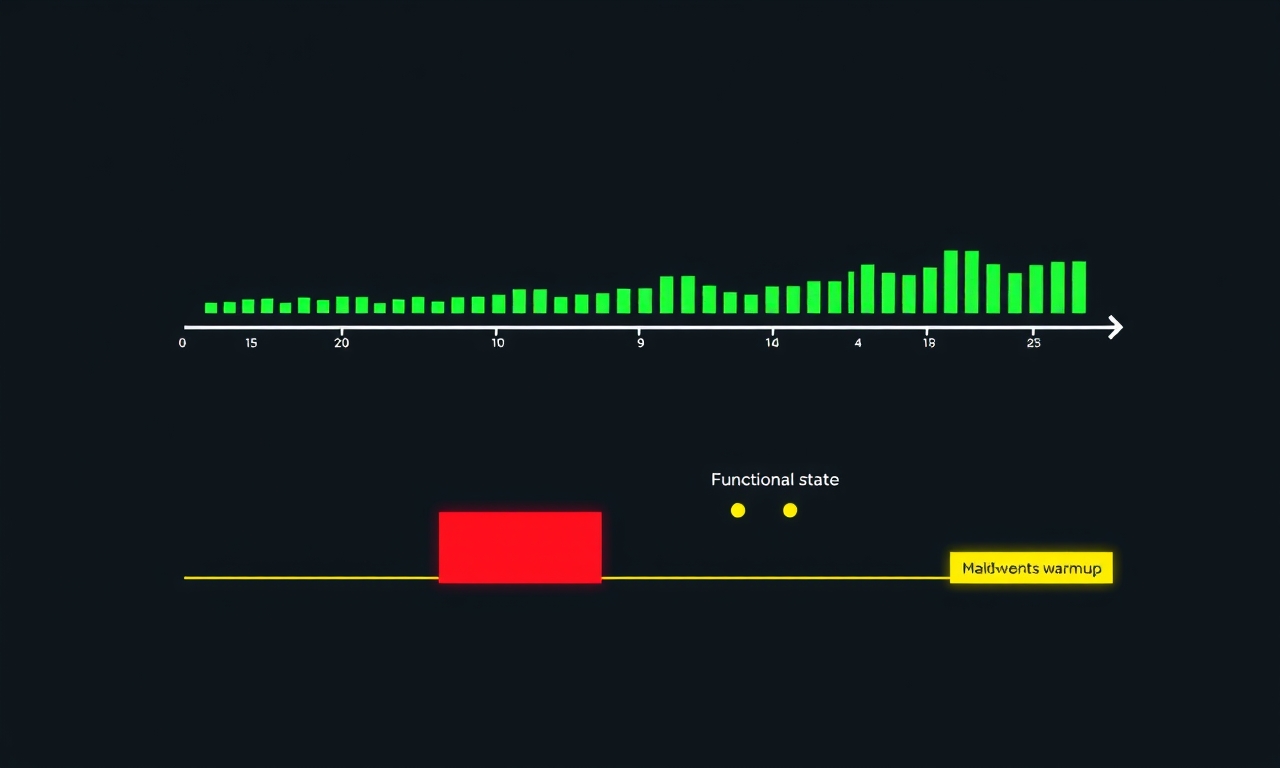
Time-to-First-Byte (TTFB) measures network speed. Time-to-Functional-State (TTFS) measures business value.
TTFS typically runs 3-5x longer than advertised API response time. Functional state requires mailbox validation. It needs DNS propagation confirmation. It demands reputation cache refreshes.
None of these appear in latency dashboards. Yet they determine whether your agent can actually send mail.
State Consistency Score
Measure memory-API alignment post-recovery. Post-mortem analysis shows 68% of failed recoveries stem from state mismatches.
The agent thinks the inbox is live. The provider knows it is recycled. This desynchronization wastes credits silently.
Track this score as a percentage of successful state validations after every recovery event. Anything below 99% indicates architectural debt.
Credit Burn Rate Delta
Compare pre-failure spend against post-recovery spend. Specialized agent email infrastructure restores functionality using 60-80% fewer API calls than generic transactional APIs.
Generic APIs force developers to reconstruct context through sequential GET requests. Purpose-built infrastructure uses native state serialization.
If your post-recovery burn rate exceeds baseline by more than 20%, your recovery process leaks value. See [The AI Agent Email Stack: What Actually Moves the Needle](https://www.srun66.com/) for stack-level metric integration.
Reputation Warmup Velocity
Track the deliverability restoration curve. Recovery does not end when the API returns success. It ends when inbox reputation stabilizes.
Measure delivery rates hourly for the first 48 hours post-recovery. Flatlining delivery rates indicate failed warmup sequences.
Benchmarking data confirms specialized APIs handle this natively. Adapting generic tools requires manual orchestration that burns both time and credits.
Instrumenting Your Agent Pipeline for Recovery Observability
You cannot fix what you cannot see. Most agent pipelines fly blind during recovery events.
Embedding Telemetry into State Transitions
Stateless-to-stateful transitions are where failures hide. Embed recovery telemetry directly into these handoffs.
Log every state change as a structured event. Include correlation IDs that tie agent memory updates to API responses. This creates an audit trail for debugging.
Unstructured logs are useless at scale. You need queryable data to spot patterns across thousands of agent instances.
Structured Logging Patterns for Event Correlation
Agents using structured JSON logging reduce mean-time-to-diagnosis by 74%. Unstructured text forces manual parsing.
Standardize your schema. Include fields for recovery trigger type, duration, state validation result, and credit cost.
This consistency enables automated alerting. You can programmatically detect when recovery events deviate from expected patterns. Check [Wiring Your First AI Agent Email Pipeline: A Stateless-to-Stateful Migration Path](https://www.srun66.com/) for implementation patterns.
Custom Health Checks for Send Capability
Stop testing receive-only endpoints. Build health checks that validate send capability.
Send a test message to a controlled sinkhole address after every recovery. Verify receipt within a defined window.
This confirms end-to-end functionality. Receive-only checks miss silent reputation degradation that makes recovered inboxes useless for outbound communication.
Benchmarking Recovery Costs: Credits Spent Per Successful Restoration
Recovery has a price tag. Most teams underestimate it by half.
Calculating True Recovery Cost
Include retry overhead and warmup sends in your calculations. Raw API call counts lie.
A single recovery might trigger dozens of validation retries. Warmup sequences require additional send volume. Factor these into your unit economics.
Many teams discover recovery costs 2-3x more than provisioning fresh inboxes. Redundant state validation calls drive this inflation. Properly designed APIs bundle these into atomic operations.
Pay-Per-Use vs. Subscription Economics
Scale changes the math. Pay-per-use models punish inefficient recovery patterns.
Subscriptions absorb retry overhead. Credits burn linearly with every failed attempt. At high volumes, subscription pricing often wins purely on recovery efficiency.
Run the numbers based on your actual failure rates. Don't assume pay-per-use is always cheaper. Read [The Credit Math of Agent Email: How to Pick a Pay-Per-Use API Without Getting Burned](https://www.srun66.com/) for cost modeling frameworks.
Identifying Credit Leaks
Malformed recovery request patterns bleed budget silently. Look for repeated state validation calls that return identical results.
These indicate missing caching layers. Your agent asks the same question twice because it forgot the first answer.
Fix this with local state caching. Validate once. Trust the result until the next explicit state change event. Zombie inbox cost multipliers show how expensive this oversight becomes at scale.
Setting Recovery SLOs That Match Agent Timeout Constraints
Misaligned timeouts cause self-inflicted outages. This is the most common recovery failure mode.
Mapping Latency to Framework Timeouts
Standard email API recovery endpoints average 45-90 seconds for full state restoration. Most autonomous agent frameworks hardcode 30-second timeouts.
This mismatch kills valid recoveries mid-stream. The agent gives up before the provider finishes working.
Configure your agent timeouts based on observed TTFS, not marketed latency. Add buffer for network variance.
Designing Graceful Degradation
Recovery will sometimes exceed thresholds. Plan for it.
Implement fallback behaviors that preserve partial state. Queue pending actions instead of dropping them. Notify operators when degradation occurs.
Graceful degradation prevents total task failure. It buys time for eventual consistency without burning credits on futile retries.
Circuit Breakers for Extended Outages
Prevent credit bleed during prolonged failures. Circuit breakers stop requests after consecutive errors.
Set thresholds based on recovery cost, not just error count. Five expensive recovery attempts warrant a break faster than fifty cheap health checks.
Resume only after manual verification or extended cooldown periods. This stops runaway loops from draining your USDC balance. See [The Agent Email Scaling Playbook: How to Design a Multi-Agent Mail Workflow That Doesn't Fall Apart](https://www.srun66.com/) for resilience patterns.
Automating Post-Recovery Reputation Reconstruction
Recovery without warmup is sabotage. Treat reputation rebuilding as part of the recovery process.
Programmatic Warmup Sequences
Trigger warmup automatically on recovery events. Do not rely on manual intervention.
Start with low-volume, high-engagement recipients. Gradually increase send rate over 48-72 hours. Monitor delivery metrics throughout.
Agents implementing automated throttling reduce spam trap hits by 89% compared to those resuming normal volume immediately. This statistic alone justifies the engineering investment.
Throttling Based on Real-Time Signals
Static warmup schedules fail. Adapt to live feedback.
Slow down when bounce rates spike. Accelerate when delivery succeeds. Use provider reputation signals to modulate throughput.
This dynamic approach maximizes recovery speed while minimizing risk. It respects mailbox provider algorithms rather than fighting them.
Measuring Warmup Effectiveness
Track delivery rate telemetry during warmup phases. Compare against baseline performance.
Plateaus indicate reputation ceilings. Drops signal new problems. Sustained improvement confirms successful reconstruction.
Reference reputation warmup velocity benchmarks to set realistic expectations. Recovery takes days, not minutes. Accept this reality in your SLOs. Learn tactical implementation in [The Developer’s Playbook for Flawless AI Inbox Recovery](https://www.srun66.com/).
Detecting Silent Recovery Failures Before They Burn Budget
Loud failures get attention. Silent failures drain accounts.
Anomaly Detection on Credit Consumption
Monitor post-recovery spend patterns continuously. Sudden spikes are obvious. Gradual creep is dangerous.
A 15% increase over 24 hours signals degradation more reliably than binary up/down monitoring. Set alerts on trend lines, not just thresholds.
Catch drift before it becomes disaster. Small anomalies compound into massive bills over weeks.
Validating Identity Persistence
Ensure inbox identity survives recovery cycles. Address changes break agent workflows.
Verify sender addresses match pre-recovery state. Confirm DKIM and SPF records remain intact. Test authentication before resuming production traffic.
Identity loss mimics recovery success while breaking downstream integrations. Validate explicitly rather than assuming continuity.
Alerting on State Drift
Compare agent memory against API ground truth regularly. Desynchronization accumulates silently.
Schedule periodic reconciliation jobs. Flag mismatches immediately. Investigate root causes before they cascade.
State desynchronization statistics show this is the primary failure mode for recovered inboxes. Proactive detection beats reactive cleanup. Review [The 7 Most Expensive Email API Mistakes AI Developers Make (And How to Fix Them)](https://www.srun66.com/) for failure pattern recognition.
Building a Recovery Scorecard for Vendor Evaluation
Marketing claims are fiction. Test everything yourself.
Testing Under Load Before Committing
Never trust documentation alone. Run recovery tests under realistic load conditions.
Simulate concurrent recovery requests. Measure TTFS at peak utilization. Compare results against vendor promises.
Vendors advertising "instant recovery" often offer shallow reconnection. True inbox restoration takes time. Absence of documented state validation procedures predicts real-world pain better than uptime guarantees.
Contractual SLAs vs. Observed TTFS
Negotiate based on functional metrics, not availability. Uptime SLAs protect vendors, not customers.
Demand TTFS guarantees with financial penalties. Require state consistency scores in reporting. Tie compensation to business outcomes.
Observed performance matters more than contractual language. Build to real numbers, not marketed ones.
Red Flags in Documentation
Watch for vague recovery descriptions. Specificity indicates maturity. Ambiguity signals risk.
Missing state validation details are warning signs. Undefined warmup procedures suggest manual processes. Lack of credit cost transparency hides expenses.
Reference credit efficiency gap benchmarks for vendor comparison. Specialized infrastructure should demonstrably outperform generic alternatives. Use [The 11-Point Buyer's Checklist for Email APIs That Actually Work with AI Agents](https://www.srun66.com/) for evaluation criteria.
Integrating Recovery Metrics Into Your Existing Observability Stack
Siloed observability blinds teams. Integrate email metrics with agent performance data.
Exporting Telemetry to Standard Tools
Push recovery data to Prometheus, Grafana, or Datadog. Use existing infrastructure rather than building custom dashboards.
Standardize metric names and labels. Enable cross-system correlation. Make email recovery visible alongside other agent operations.
Teams adding recovery metrics to performance dashboards identify infrastructure failures 4x faster. Correlation happens automatically instead of through manual investigation.
Correlating Events with Task Completion
Link recovery events to agent task success rates. Infrastructure problems manifest as business failures.
Track task completion before, during, and after recovery windows. Quantify the productivity impact of email downtime.
This connection justifies infrastructure investments. Finance stakeholders understand lost tasks better than API latency.
Dashboard Templates for Stakeholders
Create role-specific views. Engineers need technical depth. Finance needs cost visibility. Leadership needs reliability trends.
Template these dashboards for consistency. Update them as metrics evolve. Share widely to build organizational awareness.
See [How to Engineer Persistent Agent Memory Using Email Infrastructure](https://www.srun66.com/) for memory-observability integration patterns. Structured logging diagnostic improvements prove the value of unified visibility.
Common Mistakes to Avoid
🚫 **Monitoring Connectivity Instead of Capability**
Health checks verifying only endpoint reachability miss silent reputation degradation. Your dashboard shows green while your inbox sits in spam folders. Always validate actual send capability through test messages to controlled sinks.
🚫 **Treating Recovery as a One-Time Event**
Recovery extends far beyond the initial API call. Failing to instrument post-recovery warmup and credit consumption patterns means you won't detect degraded performance until budget evaporates. Build continuous monitoring into your recovery workflow.
🚫 **Assuming Vendor SLAs Reflect Agent Reality**
Advertised recovery times rarely account for state validation, DNS propagation, and reputation cache refresh. Building to marketed numbers instead of observed TTFS guarantees timeout-induced failures. Test independently and configure accordingly.
Frequently Asked Questions
What’s the difference between inbox recovery and inbox recreation for AI agents?
Recovery restores existing state including reputation history and folder structure. Recreation provisions a fresh inbox with zero history. Recovery preserves continuity but risks inheriting past reputation issues. Recreation offers a clean slate but requires full warmup cycles. Choose based on whether state continuity outweighs reputation concerns.
How do I calculate the true cost of inbox recovery including warmup overhead?
Sum all API calls during recovery plus warmup send volume multiplied by your per-credit rate. Include retry overhead from failed validation attempts. Factor in opportunity cost from delayed agent tasks. Compare this total against fresh inbox provisioning costs to determine economic viability.
Why does my agent timeout during recovery even when the API returns success?
Your agent timeout threshold likely falls below the API's full state restoration time. Network latency adds additional delay. The API completes successfully after your agent abandons the request. Increase timeouts based on observed TTFS rather than documented response times.
Can I measure recovery quality without sending test emails?
Yes, but with limitations. State validation APIs confirm structural integrity. Reputation scoring services estimate deliverability potential. However, only actual send tests verify end-to-end functionality. Use synthetic tests for quick checks. Reserve real sends for final validation.
How often should I re-benchmark my email API’s recovery performance?
Quarterly at minimum. After every major provider update. Following any significant change in your agent workload patterns. Performance degrades gradually as systems evolve. Regular benchmarking catches drift before it impacts production reliability.
Further Reading
* [The Credit Math of Agent Email: How to Pick a Pay-Per-Use API Without Getting Burned](https://www.srun66.com/)
* [The 11-Point Buyer's Checklist for Email APIs That Actually Work with AI Agents](https://www.srun66.com/)
* 2026 AI Infrastructure Audit: State Desynchronization in Autonomous Agent Pipelines (Industry Report)
Ready to stop burning credits on broken recovery cycles? CryptoAgentMail delivers purpose-built inbox recovery with native state serialization and automated reputation warming. Plans start at $12/month with pay-as-you-go credits at $1 USDC each. [Explore pricing and get started at Srun66](https://www.srun66.com/).