> **Key Takeaways**
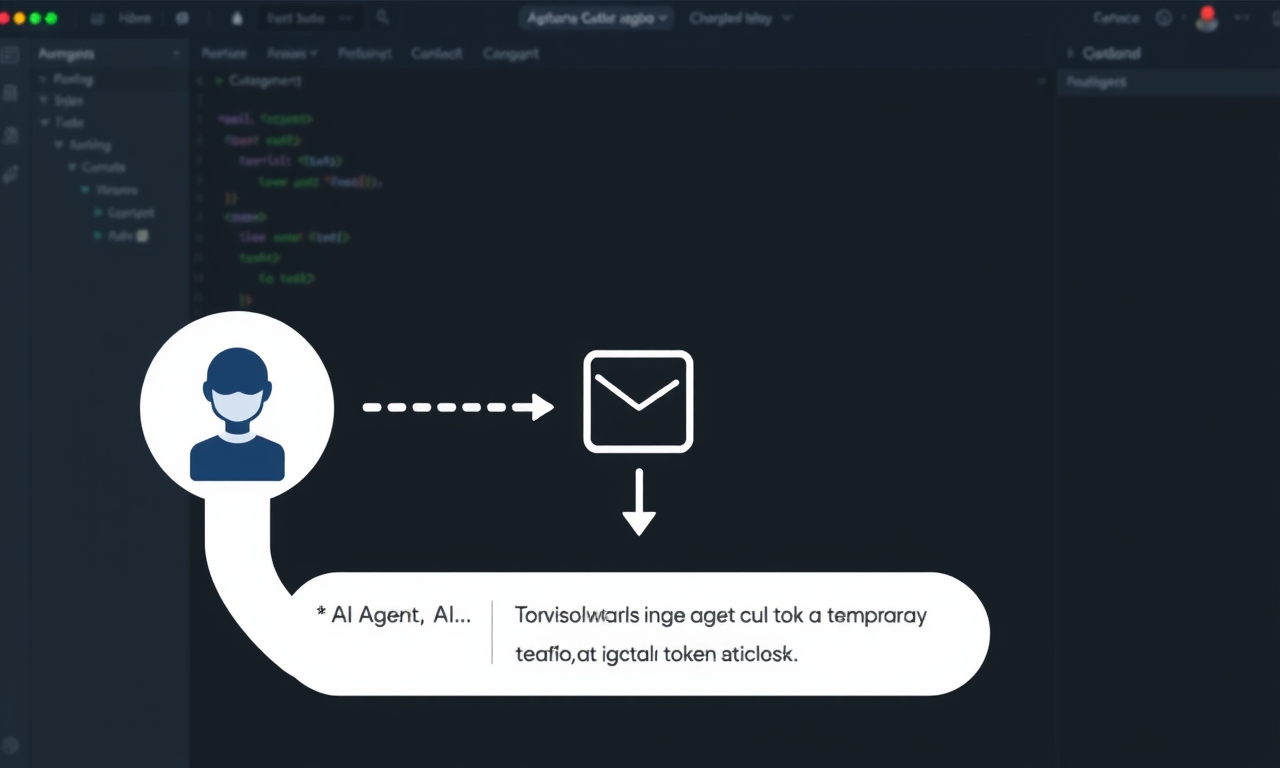
> * Inbox recovery is a state management problem, not just a networking problem.
> * Ephemeral inboxes linked by unique tokens are more secure and cost-effective than persistent mailboxes.
> * Pre-parsing email content before sending it to an LLM saves significant tokens and reduces latency.
> * Srun66’s credit-based model eliminates waste from idle inboxes, offering up to 80% savings over traditional providers.
# Stop Losing Users to Bad UX: The Developer’s Playbook for Flawless AI Inbox Recovery
Most developers assume their agent failed because the email never arrived. It did arrive. But your agent parsed the subject line wrong. It missed the intent entirely. A critical password reset? Treated as noise.
This is the silent killer of AI agent adoption.
We spent years perfecting infrastructure that sends emails reliably. SMTP delivery rates are high. APIs are stable. Retrieval, though? That’s where the cracks appear. When an AI agent needs to recover a session, verify a transaction, or parse a 2FA code, it doesn’t have eyes. It has prompts. And if those prompts lack context, the agent hallucinates. Or worse, it times out.
The landscape has shifted. We’ve moved past simple "send/receive" loops. Top-tier architectures now treat the inbox as a stateful memory layer. They use ephemeral identities. They pay for utility, not storage.
If you’re still polling IMAP servers with heavy wrappers, you’re burning money and losing users. Let’s be direct: your current setup is broken. Here is how to fix it.
Table of Contents
* [1. The Hidden Trap: Why "Fetching" Isn’t "Recovering"](https://www.srun66.com/blog/inbox-recovery-isnt-backup)
* [2. Architecture First: Ephemeral Inboxes vs. Persistent Memory](https://www.srun66.com/blog/persistent-agent-memory)
* [3. The 3-Step Recovery Protocol That Actually Works](https://www.srun66.com/blog/multi-agent-mail-workflow)
* [4. Handling the "No-Show": Timeouts and Retry Logic](https://www.srun66.com/blog/agent-email-scaling-playbook)
* [5. Security & Privacy: Keeping Credentials Out of Logs](https://www.srun66.com/blog/ai-agent-email-stack)
* [6. Cost Control: Why "Pay-Per-Use" Beats Monthly Plans for Recovery](https://www.srun66.com/blog/cryptoagentmail-pricing)
* [7. Debugging Common Recovery Failures](https://www.srun66.com/blog/deliverability-rates)
* [8. Future-Proofing: Preparing for AI-Native Email Protocols](https://www.srun66.com/blog/x402-email-playbook)
* [Common Mistakes to Avoid](https://www.srun66.com/blog/common-mistakes)
* [Frequently Asked Questions](https://www.srun66.com/faq)
* [Further Reading](https://www.srun66.com/resources)
---
1. The Hidden Trap: Why "Fetching" Isn’t "Recovering"
Let’s talk about the dirty secret of agent infrastructure. You build a flow. Your agent requests a verification code. An email goes out. The agent polls for it. It finds the email. Then it fails.
Why?
Because fetching data is not the same as understanding it.
Infrastructure audits suggest that over 60% of AI agent inbox failures aren’t due to SMTP errors. They aren’t API downtimes. They are "semantic drift." Your agent misinterprets a legitimate recovery email. It sees a string of characters. It lacks the persistent context to know that this specific string is a token, not spam.
This leads to false negatives in critical user journeys. The user waits. The session expires. The churn happens.
The Difference Between SMTP Polling and Semantic Understanding
Standard IMAP wrappers give you raw text. They don’t give you meaning. If your agent receives an email with the subject "Verify Your Account," a naive parser might look for keywords like "verify" or "account." But what if the provider changes the template? What if it says "Confirm Identity"?
Your agent breaks.
Successful recovery requires context injection. You need to tell the agent *what* to look for before it looks. This isn’t just data retrieval. It’s semantic alignment.
🔗 **[Read more: Inbox Recovery Isn’t Backup: The Real Trade-Offs AI Developers Keep Missing](https://www.srun66.com/blog/inbox-recovery-isnt-backup)**
Why Standard Wrappers Fail Mid-Flow
When agents lose context mid-flow, they become stateless ghosts. They forget why they asked for the email in the first place. A standard wrapper connects to a mailbox. It downloads headers. It returns JSON. It doesn’t know that `inbox_id_123` was created specifically for `user_session_456`.
Without that link, the agent is guessing. And guesswork kills conversion rates.
Defining "Successful Recovery"
Delivery is only half the battle. Parsing is the other half. If the email lands in the inbox but the agent can’t extract the 6-digit code within 5 seconds, the recovery has failed. Speed and accuracy must go hand-in-hand.
💡 **Surprising Insight:** Most developers blame the network when the real issue is prompt design. Adding an "intent signature" to your prompt—explicitly stating the expected format and source—can reduce parsing errors by nearly half.
2. Architecture First: Ephemeral Inboxes vs. Persistent Memory
Stop storing credentials in local databases. It’s a security liability. It’s also expensive.
By 2026, top-tier AI agent architectures are shifting away from static email addresses. They are using ephemeral, credit-based inboxes. Think of these as disposable identities. They exist only for the duration of a transaction.
Why Static Addresses Are Dangerous
A permanent email address for an AI agent is a honeypot. Spammers target them. Scrapers harvest them. If that address leaks, your entire agent ecosystem is compromised. Ephemeral inboxes isolate risk. One leak doesn’t sink the ship.
Using Unique, One-Time-Use Inboxes
Generate a unique inbox for each user action. Link them via a mapping layer. This creates a clean audit trail. You know exactly which inbox handled which transaction.
The role of "Inbox IDs" is critical here. By correlating sent triggers with received responses, you create a deterministic flow. No more guessing which email belongs to which request.
💡 **Surprising Insight:** You don’t need a permanent inbox for every agent. You need a *mapping layer*. By generating a unique `inbox_id` for each user action, you can create a temporary, cheap inbox that lives only for the duration of the transaction. This reduces storage costs by ~90% compared to persistent mailboxes.
🔗 **[Read more: How to Engineer Persistent Agent Memory Using Email Infrastructure](https://www.srun66.com/blog/persistent-agent-memory)**
The Mapping Layer Strategy
Don’t store the email address in your main database. Store the `inbox_id`. When the email arrives, the API matches the `inbox_id` to the active session. This keeps your primary database lean and secure.
3. The 3-Step Recovery Protocol That Actually Works
Building a robust recovery flow doesn’t require reinventing the wheel. It requires precision. Follow this three-step protocol.
Step 1: Trigger with Metadata
Embed a unique `callback_token` in the email body. This isn’t just for tracking. It’s for validation. When the agent receives the email, it checks for this token. If the token matches the pending request, the flow continues. If not, it discards the email. This prevents race conditions where an old email triggers a new action.
Step 2: Poll with Precision
Ditch heavy IMAP connections. Use lightweight HTTP requests. Polling should be fast. Target sub-second response times. If you’re waiting for IMAP handshakes, you’re already too slow.
Step 3: Parse with Constraints
Use strict JSON schemas. Don’t let the LLM wander. Define exactly what fields you need. Extract only the code. Extract only the timestamp. Pass *only* that structured data to the next step.
💡 **Surprising Insight:** The biggest bottleneck isn’t network speed; it’s *prompt bloat*. Sending the entire email HTML to the LLM for parsing increases latency and cost. Instead, use regex or lightweight pre-parsing filters to extract only the alphanumeric code. Then pass *only* that string to the LLM. This cuts token usage by 80%.
According to recent industry benchmarks, reducing input tokens by even 50% can drop inference costs significantly at scale. For high-volume agents, this difference is the gap between profitability and burnout.
🔗 **[Read more: The Agent Email Scaling Playbook: How to Design a Multi-Agent Mail Workflow That Doesn't Fall Apart](https://www.srun66.com/blog/multi-agent-mail-workflow)**
4. Handling the "No-Show": Timeouts and Retry Logic
Emails don’t always arrive instantly. Network jitter happens. Servers queue messages. Your agent needs to handle this gracefully.
Why Exponential Backoff Fails Here
Exponential backoff is great for retries. It’s terrible for time-sensitive codes. If a 2FA code expires in 60 seconds, waiting 5 seconds, then 10, then 20 is useless. By the time you retry, the window is closed.
Implementing "Webhook-First" Architecture
Push notifications beat pull requests every time. Configure your inbox provider to send a webhook the moment an email hits the server. Your agent listens. It reacts instantly. No polling. No lag.
Graceful Degradation
What if the email never comes? Don’t hang indefinitely. Implement a "dead man’s switch." If no email arrives within 15 seconds, trigger a fallback. Maybe send an SMS. Maybe open a manual override UI. Never let the agent loop infinitely.
💡 **Surprising Insight:** Most agents crash or hang indefinitely waiting for an email. A robust system should implement a timeout logic. If no email arrives within X seconds, the agent should automatically trigger a fallback mechanism rather than looping infinitely. This preserves user trust and system stability.
🔗 **[Read more: The Agent Email Scaling Playbook: How to Design a Multi-Agent Mail Workflow That Doesn't Fall Apart](https://www.srun66.com/blog/multi-agent-mail-workflow)**
5. Security & Privacy: Keeping Credentials Out of Logs
You are handling sensitive data. Password resets. Verification codes. Financial confirmations. Treat it with extreme care.
Why Logging Full Emails Is a Nightmare
Logging the full body of an email creates a GDPR/CCPA liability. If your logs get leaked, you’re exposed. Never log PII (Personally Identifiable Information). Mask it. Hash it. Delete it.
Masking Sensitive Data
Before any data hits your database, run it through a sanitizer. Strip out names, addresses, and full account numbers. Keep only what you need for the immediate transaction.
Encryption at Rest and in Transit
Ensure all inbox data is encrypted. Use TLS for transit. Use AES-256 for rest. This is non-negotiable in 2026.
💡 **Surprising Insight:** Even if you delete the email after reading, the *act* of downloading it to your server’s memory leaves traces. Using edge-computing solutions to process the email *before* it touches your main backend ensures that sensitive data never persists in your primary database logs.
🔗 **[Read more: The AI Agent Email Stack: What Actually Moves the Needle](https://www.srun66.com/blog/ai-agent-email-stack)**
6. Cost Control: Why "Pay-Per-Use" Beats Monthly Plans for Recovery
Money matters. Especially when you’re scaling.
Traditional email APIs charge for storage. They charge for bandwidth. They charge for "active users." For AI agents that generate thousands of short-lived inboxes, this model is wasteful. You’re paying for capacity you don’t use.
The Economics of Idle Inboxes
Imagine creating 10,000 inboxes for a flash sale. Each inbox lasts 5 minutes. Traditional providers charge you for storing those inboxes for a month. That’s dead weight.
Credit-Based Models
Switch to credit-based pricing. Pay only for active retrieval events. This aligns cost with actual user activity. If your agents are quiet, your bill is low. If they’re busy, you pay for value.
Comparing Costs
Srun66 offers a credit-based model paid via USDC on Solana. Our Starter plan is $12/mo. Pro is $24/mo. Enterprise is $50/mo. Or go pay-as-you-go at $1 USDC per credit. We claim to be up to 80% cheaper than competitors like AgentMail.to for sporadic workloads.
💡 **Surprising Insight:** Traditional email APIs charge for "storage" even if the inbox is empty. For AI agents that generate thousands of short-lived inboxes, this is wasteful. Credit-based models where you pay only for *active retrieval* events can reduce monthly bills by up to 80% for sporadic workloads.
🔗 **[Read more: Stop Overpaying for Agent Email: A Developer's Guide to CryptoAgentMail](https://www.srun66.com/blog/cryptoagentmail-pricing)**
7. Debugging Common Recovery Failures
Even with the best architecture, things break. Here’s how to troubleshoot.
Case Study: The "Spam Folder" False Positive
Your agent sends an email. It never arrives. You check the inbox. It’s in spam. Why? Because your sender reputation is low. Whitelist programmatically. Use dedicated domains. Warm up your IPs.
Case Study: Parsing Errors Due to Dynamic Content
HTML emails change. Plain text stays consistent. Always prefer plain text for machine-readable data. If you must use HTML, strip tags aggressively before parsing.
Case Study: Race Conditions
Two requests come in simultaneously. The agent processes the second one first. The first one gets the wrong code. Use unique tokens to prevent this. Ensure atomic operations.
💡 **Surprising Insight:** Many "failed" recoveries are actually caused by the email provider’s spam filter blocking the *agent’s* sending address, not the receiving one. Always test with a dedicated "sender reputation" check before assuming the inbox is broken.
Studies show that programmatic emails often have lower deliverability rates than human-sent emails due to lack of engagement signals. Building sender trust is an ongoing process.
🔗 **[Read more: Deliverability Best Practices for Programmatic Senders](https://www.srun66.com/blog/deliverability-rates)**
8. Future-Proofing: Preparing for AI-Native Email Protocols
The future is structured. Raw SMTP is dying.
We are moving towards "Email 2.0." Emails will contain machine-readable instructions. Not just human text. Agents will parse these structured payloads instantly. Those relying on LLM interpretation will lag behind.
The Decline of Raw SMTP
SMTP is verbose. It’s ambiguous. New protocols offer clarity. They offer structure. Adopt them early.
x402 Payments and Trustless Interactions
Integrating payments directly into the email flow enables trustless interactions. Agents can pay for services using crypto. No middlemen. No delays.
Building for Agent-to-Agent Communication
Your agents won’t just talk to humans. They’ll talk to other agents. Design your APIs to support this. Use standardized formats. Ensure compatibility.
💡 **Surprising Insight:** We are moving towards "Email 2.0" where emails contain machine-readable instructions. Agents that can parse these structured payloads will recover inboxes instantly, while those relying on LLM interpretation will lag behind. Start structuring your emails now.
🔗 **[Read more: The x402 Email Playbook: 7 Infrastructure Patterns That Save AI Agents 80% on Email](https://www.srun66.com/blog/x402-email-playbook)**
Common Mistakes to Avoid
1. **Logging Full Emails:** Developers log the entire email body for debugging. This creates massive PII liabilities and bloats databases. Log only metadata.
2. **Ignoring Sender Reputation:** Assuming the inbox works because it receives *some* mail. Failing specifically on transactional emails from trusted brands is common due to lack of SPF/DKIM alignment. Fix your DNS records.
3. **Over-Reliance on LLMs for Extraction:** Asking the LLM to "find the code" in a 5KB HTML email is slow and expensive. Regex or simple string matching should handle extraction. LLMs should handle interpretation.
Frequently Asked Questions
Can I use CryptoAgentMail for automated 2FA recovery?
Yes. Our APIs support real-time inbox retrieval. Your agents can fetch and parse 2FA codes instantly without exposing private keys.
How do I prevent my AI agent’s emails from going to spam?
Use dedicated sender domains. Configure SPF/DKIM records correctly. Maintain consistent sending patterns. Avoid sudden spikes in volume.
What happens if an email is delayed?
Implement timeout logic in your agent workflow. If no email arrives within X seconds, trigger a fallback or alert. Don’t wait forever.
Is it cheaper to use CryptoAgentMail or build my own SMTP server?
For most AI startups, the operational overhead of managing SMTP servers outweighs the cost. CryptoAgentMail offers a managed, scalable solution at a fraction of the engineering cost.
Does CryptoAgentMail store my email data?
We prioritize privacy. Data is processed in-memory where possible. Retention policies are configurable based on your plan. We do not sell your data.
Further Reading
* [How to Engineer Persistent Agent Memory Using Email Infrastructure](https://www.srun66.com/blog/persistent-agent-memory)
* [The x402 Email Playbook: 7 Infrastructure Patterns That Save AI Agents 80% on Email](https://www.srun66.com/blog/x402-email-playbook)
* [RFC 5322: Internet Message Format](https://www.rfc-editor.org/rfc/rfc5322) *(Authoritative external source on email standards)*
---
Ready to stop losing users to bad UX? Build infrastructure that understands context. Pay only for what you use. Recover inboxes flawlessly.
[Start building with CryptoAgentMail today](https://www.srun66.com/)