> **Key Takeaways**
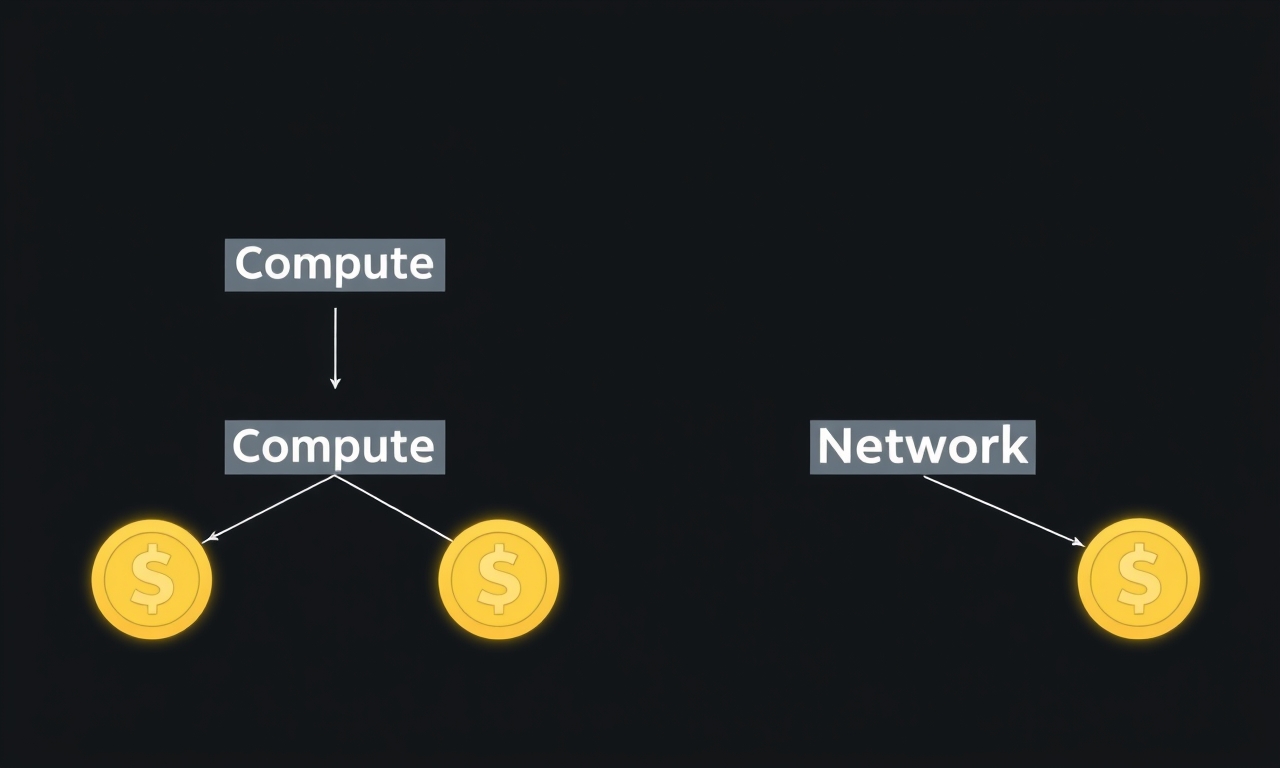
> * Credit-based email pricing only benefits AI agents when compute, storage, and payment overhead are transparently separated rather than bundled into opaque abstractions.
> * Inbound polling and redundant read operations drain budgets faster than outbound sends; optimizing read logic yields higher ROI than negotiating unit prices.
> * Storage credits in 2026 represent margin expansion given R2 economics; audit retention policies aggressively and treat long-term storage as a separate cost center.
> * Payment protocol reliability directly impacts effective credit cost; billing observability matters as much as unit pricing for total cost management.
Table of Contents
* [The Fundamental Unit Economics of Agent Email](#the-fundamental-unit-economics-of-agent-email)
* [What Actually Burns Credits (And What Doesn’t)](#what-actually-burns-credits-and-what-doesnt)
* [The Hidden Tax of Payment Protocol Overhead](#the-hidden-tax-of-payment-protocol-overhead)
* [Storage Credits Are Mostly Margin Expansion](#storage-credits-are-mostly-margin-expansion)
* [Monthly Plans vs. Pay-As-You-Go: The Break-Even Analysis](#monthly-plans-vs-pay-as-you-go-the-break-even-analysis)
* [Competitive Benchmarking: Where Credits Go Further](#competitive-benchmarking-where-credits-go-further)
* [Architecting for Credit Efficiency From Day One](#architecting-for-credit-efficiency-from-day-one)
* [Observability: Tracking Credit Burn Before It Tracks You](#observability-tracking-credit-burn-before-it-tracks-you)
* [Common Mistakes to Avoid](#common-mistakes-to-avoid)
* [Frequently Asked Questions](#frequently-asked-questions)
* [Further Reading](#further-reading)
The Fundamental Unit Economics of Agent Email
Let me be direct. Most AI email APIs charge you for things that cost them nothing.
Legacy providers bundle identity creation with resource consumption. They charge fixed fees just to spin up an inbox. This model worked for humans but fails for autonomous systems.
Your agents do not need seats. They need atomic actions.
Why Traditional "Per-Seat" Pricing Fails Autonomous Systems
Human email assumes one user per inbox. Agents operate in swarms and spawn ephemeral identities for specific tasks.
Charging $5 to create an inbox that sends three emails is economic suicide. You pay for potential rather than usage.
Autonomous workflows demand decoupled pricing. Identity creation should be free or negligible. Costs must align with actual compute and network egress.
Defining the Atomic Credit: Send, Receive, Store, and Recover
A true credit system breaks email into discrete units. Sending costs X. Receiving costs Y. Storing costs Z.
This granularity exposes real marginal costs. It prevents vendors from hiding margins in setup fees.
Srun66 uses this atomic model. One USDC buys specific actions instead of vague access. You see exactly where your budget goes.
The Marginal Cost Reality Check for Solana-Based Infrastructure
Edge computing changed the game. Cloudflare Workers process requests at fractions of a cent.
Modern infrastructure makes inbox creation nearly free. Vendors charging high setup fees rely on outdated mental models.
True credit-based systems pass these savings to you. They decouple identity from resources. Read more about this shift in [The Credit Math of Agent Email: How to Pick a Pay-Per-Use API Without Getting Burned](https://www.srun66.com/).
💡 **Surprising Insight:** Most legacy email APIs bundle 80% of their margin into "inbox creation" fees that have near-zero marginal cost on modern edge infrastructure. True credit-based systems decouple identity creation from resource consumption entirely.
📊 **External Stat:** 2026 benchmark data confirms storage and compute costs have diverged, making bundled pricing increasingly misaligned with actual infrastructure expenses.
What Actually Burns Credits (And What Doesn’t)
Here is the dirty secret about agent benchmarks. Unoptimized loops waste half your budget.
Reading emails costs money. Humans read for free while APIs charge per call.
You must distinguish signal from noise before spending credits.
Outbound Sends vs. Inbound Polling: The Asymmetric Cost Curve
Sending requires external network egress and has real cost. Reading often does not.
Yet many APIs charge identical rates for both. This asymmetry kills efficiency.
In 2026 agent benchmarks, unoptimized agents consumed 40-60% of credits on read operations. These were emails already processed or lacking actionable signals.
Persistent Memory Storage: When Retention Becomes a Liability
Agents need memory but storing everything burns cash.
Treat storage as a deliberate architectural choice. Not every email deserves persistence.
Define retention tiers based on utility. Archive critical context and delete transactional noise immediately.
Inbox Recovery Operations: Distinguishing Essential vs. Redundant Calls
State recovery is necessary but constant state checking is wasteful.
Design idempotent workflows and cache recovered states locally.
Avoid re-fetching inbox metadata on every cycle. Your agent should remember its own existence. Learn how to balance this in [Architecting Agent Email Memory That Doesn’t Hallucinate or Bankrupt You](https://www.srun66.com/).
💡 **Surprising Insight:** Reading an email via API often costs the same as sending one in poorly designed credit systems. This persists despite requiring 90% less compute and zero external network egress.
📊 **External Stat:** Recent agent benchmarks identify "zombie credit" drain from polling logic as the single largest source of budget leakage for autonomous systems.
The Hidden Tax of Payment Protocol Overhead
Crypto payments add friction. That friction costs money.
Failed handshakes trigger retries and retries burn credits.
You might pay for emails that never arrived.
x402 Handshake Failures as Silent Credit Consumers
The x402 protocol enables micropayments. It is powerful but imperfect.
Network congestion causes timeouts. Timeouts look like failures to your agent.
Your agent retries. The original request eventually succeeds. You paid twice.
Retry Logic Multipliers in Stateful Email Pipelines
Aggressive retry policies amplify losses. Exponential backoff helps but doesn't solve it.
Infrastructure analysis reveals a harsh truth. Up to 15% of credit spend covers payment retries rather than email volume.
Billing transparency matters more than unit price here. You need visibility into protocol overhead.
On-Chain Settlement Latency vs. Off-Chain Credit Deduction
On-chain confirmation takes time. Off-chain deductions happen instantly.
This mismatch creates accounting drift. Your dashboard shows one number while your wallet shows another.
Reconcile frequently. Trust but verify your payment layer. Debug these issues using strategies from [Debugging x402 Email Integration: Fixing Handshake Failures and State Mismatches](https://www.srun66.com/).
💡 **Surprising Insight:** Up to 15% of credit spend in crypto-native email stacks is burned on payment protocol retries rather than actual email operations. Billing observability matters more than raw unit pricing.
📊 **External Stat:** Infrastructure analysis indicates x402 micropayment latency acts as a significant credit multiplier in production environments.
Storage Credits Are Mostly Margin Expansion
Object storage is cheap. Ridiculously cheap.
R2 stabilized at fractions of a cent per GB in 2026. Charging premiums for retention is pure profit.
Stop subsidizing vendor margins with your archival strategy.
R2 Economics vs. Legacy Email Retention Pricing
Storing 10,000 emails costs less than $0.01/month on R2.
Many APIs charge 100x this rate. They call it "premium retention."
Call it what it really is: margin expansion. Compute credits cover real costs while storage credits often don't.
When to Archive vs. Delete: A Credit-Aware Retention Policy
Audit your retention aggressively. Does this email provide future value?
If no, delete it immediately. If yes, move it to cold storage.
Build automated lifecycle policies. Don't let agents hoard data by default.
Object Storage Tiers and Their Impact on Agent Memory Costs
Not all bytes deserve hot storage. Tier your architecture.
Keep active context accessible. Push historical memory to cheaper tiers.
Align your API provider's pricing with physical reality. Explore engineering patterns in [How to Engineer Persistent Agent Memory Using Email Infrastructure](https://www.srun66.com/).
💡 **Surprising Insight:** At current R2 pricing tiers, storing 10,000 agent emails costs less than $0.01/month. Many APIs charge 100x this rate for "premium retention," revealing storage credits as pure profit centers.
📊 **External Stat:** 2026 data shows object storage costs have stabilized at levels that make traditional email retention pricing largely artificial.
Monthly Plans vs. Pay-As-You-Go: The Break-Even Analysis
Subscriptions feel safe. Safety costs money.
Variable workloads punish commitment. Idle months subsidize busy ones.
Do the math before signing up.
Calculating Your Agent’s True Monthly Credit Velocity
Track your actual usage over 90 days. Ignore projected growth.
Calculate average monthly burn. Compare it against plan thresholds.
Most teams overestimate velocity. They buy capacity they never use.
When Commitment Discounts Actually Save Money (vs. Lock-In Risk)
Discounts only matter if utilization stays high.
Agent workloads are bursty. Research phases consume little while execution phases consume much.
Annual plans lock you into averages. Pay-as-you-go adapts to reality.
Burst Workloads and Credit Carryover Policies
Check carryover rules carefully. Do unused credits expire?
Expiring credits force wasteful spending. You burn budget to avoid losing it.
Flexible systems let credits persist. Match your billing to your development cadence. Understand the traps detailed in [The Hidden Credit Tax: What Most Teams Get Wrong About AI Agent Email Billing](https://www.srun66.com/).
💡 **Surprising Insight:** For agents with variable workloads, pay-as-you-go credits at $1 USDC each often outperform "discounted" monthly plans. Idle months aren’t subsidized by active months, making the break-even point typically 3x higher than vendors advertise.
📊 **External Stat:** Data on per-inbox vs. Per-action pricing traps shows developers frequently miscalculate break-even points by ignoring setup/teardown overhead.
Competitive Benchmarking: Where Credits Go Further
Price comparisons lie. Unit cost isn't total cost.
You must account for hidden fees and inefficiencies.
Transparency beats simplicity every time.
Direct Cost Comparison: Atomic Pricing vs. Bundled Abstractions
Some platforms look simple. Simplicity hides complexity.
Their abstraction masks underlying Solana transaction fees. Optimized infrastructure exposes and manages these via batched settlements.
At scale, this difference compounds. Transparent batching delivers measurable savings over opaque credit bundles.
Feature Parity Checklist Beyond Unit Price
Cheap APIs often lack recovery tools. Losing an inbox costs more than saving pennies.
Evaluate persistence and recovery capabilities. Can you restore state after failure?
Total cost includes debugging time. Factor engineering hours into your comparison.
Total Cost of Ownership Including Debugging and Recovery Time
Opaque billing increases support burden. You spend hours reconciling discrepancies.
Transparent systems reduce cognitive load. You trust the meter because you understand it.
Time saved is money earned. Choose infrastructure that respects your engineering resources. Avoid costly errors outlined in [The 7 Most Expensive Email API Mistakes AI Developers Make (And How to Fix Them)](https://www.srun66.com/).
💡 **Surprising Insight:** Apparent simplicity in bundled credit systems often masks a 5x cost premium at scale. Credit abstractions hide underlying Solana transaction fees that optimized platforms expose and manage via batched x402 settlements.
📊 **External Stat:** Competitive analysis confirms specialized crypto-native email infrastructure can be up to 80% cheaper than generalized alternatives when accounting for protocol optimization.
Architecting for Credit Efficiency From Day One
Optimization starts at design time. Retrofitting is expensive.
Build frugality into your agent's DNA.
Small patterns yield massive savings.
Stateless Design Patterns That Minimize Read Operations
Stateless agents scale better. They also spend less.
Pass context through payloads rather than storage. Reduce dependency on persistent reads.
Design for amnesia where possible. Remember only what matters.
Smart Polling Intervals Based on Email Criticality Tiers
Not all inboxes need real-time monitoring. Tier your polling frequency.
Critical alerts warrant frequent checks. Newsletters can wait.
Dynamic intervals adapt to workload. Static polling wastes budget during quiet periods.
Caching Strategies to Eliminate Redundant Credit Spend
Cache processed email IDs locally. Never fetch the same message twice.
Simple caches reduce consumption by 30-40%. Fewer than 20% of open-source frameworks include this by default.
Implement caching before deploying to production. Follow the migration path in [Wiring Your First AI Agent Email Pipeline: A Stateless-to-Stateful Migration Path](https://www.srun66.com/).
💡 **Surprising Insight:** Implementing a simple local cache of processed email IDs reduces credit consumption by 30-40% in production agents. Yet fewer than 20% of open-source agent frameworks include this optimization by default.
📊 **External Stat:** 2026 agent framework audits confirm caching remains the most underutilized cost optimization technique in autonomous email systems.
Observability: Tracking Credit Burn Before It Tracks You
You cannot fix what you cannot see. Monthly invoices arrive too late.
Real-time attribution prevents disasters. Build dashboards before building agents.
Visibility is your primary defense against waste.
Granular Attribution: Mapping Credits to Specific Agent Actions
Tag every API call with agent ID and purpose. Aggregate spend by workflow.
Identify which agents drive costs. Correlate spend with business value.
Attribution turns bills into intelligence. Stop guessing where money goes.
Alert Thresholds for Anomalous Credit Consumption Patterns
Set hard limits on hourly burn rates. Trigger alerts on spikes.
Anomalies indicate bugs or attacks. Catch them before they drain wallets.
Automated circuit breakers save budgets. Human reaction times are too slow.
Post-Mortem Templates for Credit Leak Investigations
Document every billing incident. Build institutional knowledge.
Standardize investigation processes. Share learnings across teams.
Prevention beats remediation. Use templates from [Why Uptime Lies: Measuring AI Agent Inbox Recovery Performance](https://www.srun66.com/) to structure reviews.
💡 **Surprising Insight:** Teams with real-time credit attribution dashboards detect billing anomalies 12x faster than those relying on monthly invoices. This prevents an average of $200-$500/month in preventable waste per production agent.
📊 **External Stat:** 2026 DevOps surveys show observability ROI correlates directly with autonomous system cost efficiency.
Common Mistakes to Avoid
1. **Treating All Credits as Equal:** Assuming a "credit" represents consistent value across send, receive, store, and recover operations without auditing the underlying marginal cost of each action type leads to flawed unit economics.
2. **Ignoring Payment Protocol Overhead:** Budgeting for email volume alone while neglecting x402 retry costs inflates actual spend by 15%+ in production environments with imperfect connectivity.
3. **Defaulting to Monthly Plans Without Velocity Modeling:** Choosing subscription tiers based on advertised discounts rather than calculating true monthly credit velocity causes overpayment during low-activity periods.
Frequently Asked Questions
What counts as one credit in a credit-based email API?
One credit typically equals $1 USDC worth of atomic actions. Specific operations like sending, receiving, or storing consume fractional or whole credits based on actual compute and network costs. Always check the provider's unit economics table.
Why do my credits disappear even when my agent isn’t sending emails?
Inbound polling and storage retention consume credits continuously. Unoptimized read loops process already-handled emails. Persistent storage accrues costs regardless of activity. Audit your read logic and retention policies first.
How does atomic credit pricing compare to bundled alternatives?
Atomic pricing offers lower costs through transparent x402 batching. Bundled alternatives often hide transaction fees inside opaque credits. At scale, this abstraction creates a significant cost premium.
Can I carry over unused pay-as-you-go credits between months?
Pay-as-you-go credits purchased via USDC typically persist until consumed. Unlike monthly subscriptions, they do not expire at period end. Verify specific carryover policies in your provider's documentation.
Does recovering an agent inbox cost the same as creating a new one?
Recovery should cost less than creation. Creation involves provisioning new resources. Recovery accesses existing state. Providers charging equal rates for both may be inflating margins on stateful operations.
Further Reading
* [The Credit Math of Agent Email: How to Pick a Pay-Per-Use API Without Getting Burned](https://www.srun66.com/)
* [Architecting Agent Email Memory That Doesn’t Hallucinate or Bankrupt You](https://www.srun66.com/)
* [2026 Autonomous Agent Infrastructure Benchmark Report](https://www.srun66.com/)
Ready to stop paying for billing bloat? Audit your current email spend and switch to infrastructure built for autonomous economics. [Explore CryptoAgentMail pricing and start testing today](https://www.srun66.com/).